Atlantic Plastics 2026
Third International Symposium on Marine Plastic Pollution Arctic to the Antarctic
Background
The threat of Plastic pollution to marine ecosystems and sustainable use of the ocean continues to grow steadily. A healthy ocean is fundamental to sustaining life on our blue planet. Plastic is now found at every level of the marine environment, floating on the surface, in the water column, settled on the seabed, and even within marine organisms. Today, traces of plastic are detected in the food chain and even in humans themselves. Reducing plastic pollution is crucial to safeguard marine ecosystems and ensure global well-being. The need for an international, legally binding plastics treaty, one that compels nations to cooperate on curbing plastic pollution and producing plastic more sustainably, has never been more urgent.
Despite significant efforts, the ongoing intergovernmental negotiations for a global agreement on plastics have yet to reach the consensus needed to conclude an effective treaty. Regardless of the eventual outcome, it is evident that a solid understanding of the problem and its potential solutions are essential for success. New scientific research on plastic pollution and mitigation measures is emerging worldwide, highlighting the importance of providing a platform where researchers can present their latest findings and engage in dialogue and collaboration with their peers.
A strong scientific understanding of the nature, scale, and impact of the plastic crisis is essential for developing sustainable solutions. Tackling plastic pollution effectively and preventing its entry into marine environments from both land- and sea-based sources requires coordination and collaboration among nations, local authorities, academics, as well as private-sector and public stakeholders.
For these reasons, the Government of Iceland will host the Third International Symposium on Plastics in the Atlantic at Harpa, Reykjavík Concert Hall and Conference Center, on 20-22 October 2026.
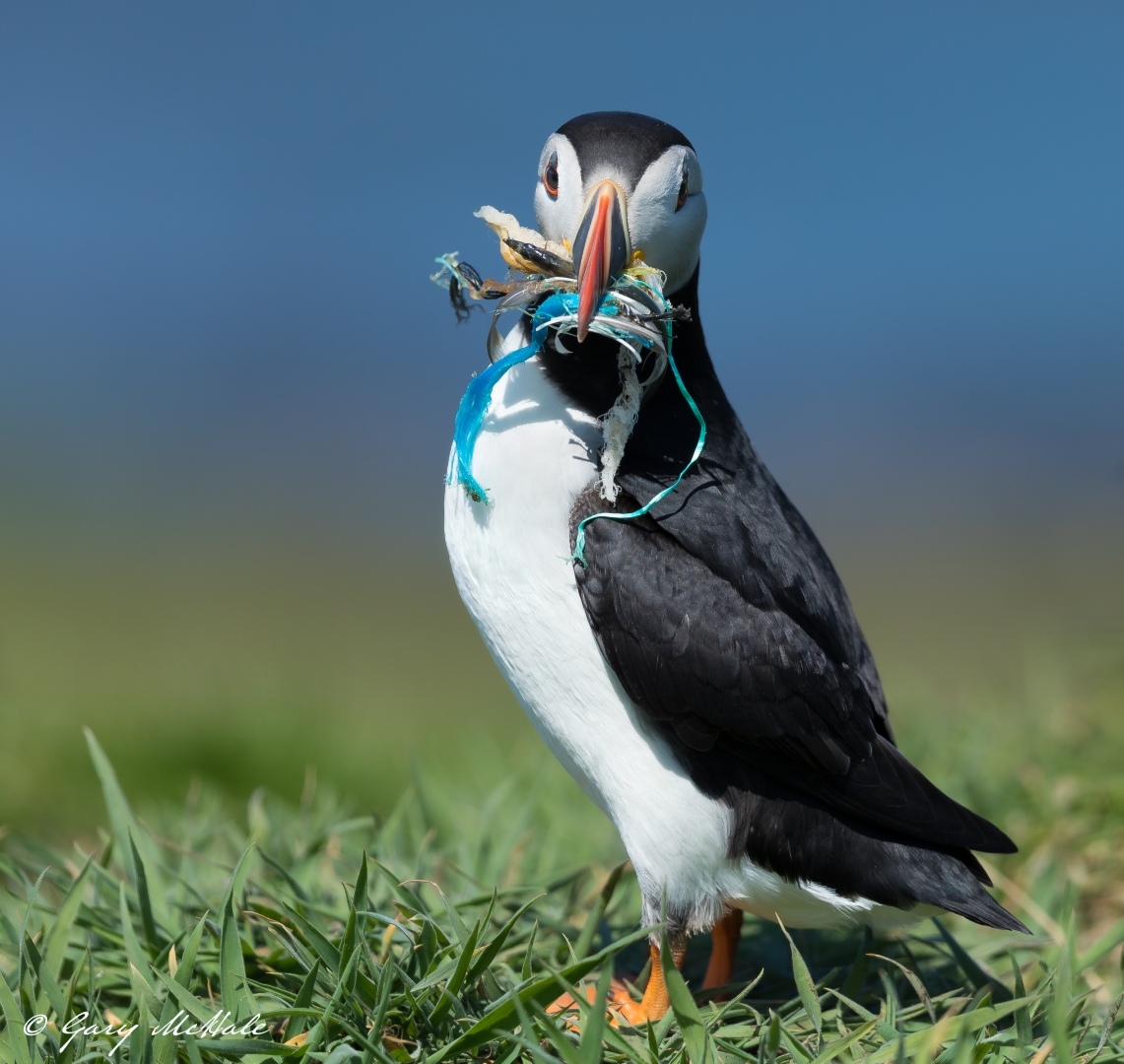
Image: Gary McHale
From the Arctic into the Atlantic, south to the Antarctic
Addressing plastic pollution in the Arctic marine environment was a key priority during the Icelandic Chairmanship of the Arctic Council (2019–2021) and Iceland’s Presidency of the Nordic Council of Ministers (2019). This focus prompted the Icelandic government, in collaboration with international partners, to host the first international Arctic Plastics Symposium in 2021, held online due to the Covid-19 pandemic. Building on its success, a second symposium took place in November 2023 at Harpa Conference Centre in Reykjavik, again organized by the Government of Iceland together with international partners.
One of the key takeaways from the second symposium was that much of the plastic found in the Arctic originates from distant regions. This underscores the need to better understand and trace the pathways through which plastics move in the marine environment. As research on marine plastics expands across both hemispheres, broadening the symposium's focus to include the entire Atlantic Ocean — from North to South — including adjacent connected seas such as the Caribbean, the Gulf of Mexico, the Mediterranean and the Baltic Sea is a logical progression and reinforces the message that plastic pollution is a global challenge demanding global cooperation and coordinated solutions.
Looking Ahead: #AtlanticPlastics2026
The past two symposia created valuable platforms for in-depth dialogue on the global plastic crisis. Building on their success, preparations are underway for the third Marine Plastics Pollution Symposium, to be hosted by the Icelandic Government in collaboration with international partners. Scheduled for October 20-22, 2026 at the Harpa Conference Centre in Reykjavik, the event will build on the scientific foundation established by previous symposia and aim to generate knowledge and recommendations to guide decision makers, while promoting collaboration, strengthening networks, inspiring innovation, and stimulate the development of new research and partnerships.
This upcoming symposium will not only examine the sources and transport pathways of marine plastics but will also highlight interdisciplinary research on the economic, social and health dimensions of plastic pollution. This includes emerging fields of research such as the impacts of plastics on marine life, human health, and national, regional and global governance and actions.
By broadening the geographic focus, #AtlanticPlastics2026 seeks to bring to light more research, more scientists, and more research institutions working in the Southern Hemisphere, and welcome contributions from the private sector and NGOs. all in support of evidence-based sustainable solutions to one of the most pressing environmental challenges of our time.
The symposium will also address practical mitigation strategies and their implementation, offering valuable input to the ongoing negotiations on an international agreement on plastic pollution and other international efforts aimed at protecting the marine environment.
A high-level Scientific Steering Committee has been established to guide the development of the symposium programme, and a call for abstracts will be launched in early 2026.
Atlantic Plastics 2026 themes
From the Arctic to the Antarctic, plastic pollution has become a defining transboundary challenge for the world’s ocean basins, none more so than the Atlantic and its connected Arctic waters. Across this vast region, plastics disperse through complex physical, chemical, and biological processes: from mega- and macro-debris impacting wildlife and coastlines, to micro- and nano-particles permeating water columns, sediments, sea ice, and even the atmosphere. These particles act not only as physical stressors, but also as vectors and sources of harmful chemicals, additives, degradation products, pathogens, and biofilms, with growing evidence of risks to ecosystems, biodiversity, food webs, and human health. At the same time, the socioeconomic and cultural fabric of Atlantic and Arctic communities, including Indigenous peoples, faces mounting pressures as fisheries, tourism, subsistence practices, and coastal economies confront the cumulative consequences of plastic pollution.
Atlantic Plastics 2026, the Third International Symposium on Marine Plastic Pollution from the Arctic to the Antarctic, convenes global experts to advance cutting-edge science, technology, and policy solutions for this rapidly evolving field. The themes for this symposium reflect the full continuum of the plastic pollution problem: innovations in monitoring and assessment; modelling of sources, pathways, and fate; environmental, human-health, sociocultural, and economic impacts; circular-economy and industry responses; mitigation and restoration approaches; and the science–policy interface required to translate knowledge into effective action. Through interdisciplinary dialogue and international cooperation, the Symposium will explore how scientific advances can support evidence-based policies, strengthen regional and global governance, and contribute to a more sustainable and resilient ocean for current and future generations.
With this in mind the Scientific Steering Committee has agreed to the following themes for the Conference:
1
Innovative Plastic Pollution Monitoring and Assessment across multi-scales
Topics under this theme may include:
• Advances in observation systems (e.g., remote sensing, citizen science) and long-term trend assessment.
• Emerging categories of plastic pollution, including textile fibres, paint particles, and tire wear particles.
• Development of new analytical approaches, tools, and technologies.
• Harmonisation, standardisation, integration, and QA/QC to enable national, regional and global monitoring, comparability, and frameworks.
2
Modelling Sources, Pathways and Fate of Plastics in the environment
Topics under this theme may include:
• Riverine, atmospheric, coastal, and offshore inputs, including contributions from shipping, fishing, and aquaculture.
• Transport processes and accumulation zones throughout the Atlantic and Arctic basins.
• Modelling approaches, predictive tools, and mass balance assessments.
3
Assessing Impacts of Plastic Pollution
Topics under this theme may include:
• Environmental, human health, cultural, and socioeconomic impacts of plastic pollution to coastal communities.
• One Health approaches integrating ecosystem, animal, and human wellbeing.
• Effects of plastic particles and associated chemicals on biota, food webs, and ecosystem services.
• Human exposure pathways and potential health outcomes.
• Economic impacts on fisheries, tourism, and coastal communities.
• Social justice, equity considerations, and behavioural drivers of plastic use and waste.
• Risk assessments addressing both the particle-related and chemical dimensions of plastic pollution.
4
Circular Economy, Innovation, and Industry Solutions
Topics under this theme may include:
• Circular economy examples and tools
• Innovations in sustainable product design, material substitution, and recycling technologies.
• Industry engagement and public–private partnerships aimed at reducing plastic leakage.
• Upstream prevention policies and extended producers responsibility (EPR)
5
Mitigation, Management, and Restoration
Topics under this theme may include:
• Waste prevention and management, improved collection, and innovative cleanup approaches.
• Nature-based solutions and restoration of affected habitats.
• Best practices and novel developments from around the world.
• Strengthening waste management infrastructure in low-capacity or remote coastal regions.
6
Science–Policy Interface and Capacity Building
Topics under this theme may include:
• Effectively translating scientific findings into policy and practice.
• Regulatory and Legislative needs, advances and tools
• Strengthening research networks and capacity across the Atlantic and Arctic regions.
• Communication and outreach e.g. journalism, classic media, social media and art
• Integration of emerging data into international agreements and regional conventions
• Stakeholder integration and collaboration
Key dates
- 15December2025
Symposium website launch
Early bird registration opens
- 10January2026
Save the dates and call for abstracts
- 31March2026
Deadline for abstract submission
- 31May2026
Draft program posted on website
- 15July2026
Early bird registration ends
- RegistrationRegister now
Register for the symposium
- 20 - 22October2026
Symposium dates
Scientific Steering Committee






















Executive Steering Committee






Organizing Team